Этот текст написан в Сообществе, в нем сохранены авторский стиль и орфография
Меня зовут Ваня, я дизайнер и много работаю с генеративной графикой. Недавно я купил альбом для семейных фотографий. Лучшие снимки поместил в альбоме, а остальные решил оцифровать.
Потом захотелось привести их в порядок с помощью ИИ — убрать царапины, пятна и другие следы времени, а некоторые фотографии попробовать раскрасить.
Для этого я решил использовать GPT Image 2. И довольно быстро столкнулся с проблемой: нейросеть не просто восстанавливает фотографию — она начинает её сильно видоизменять, в том числе и лица людей на снимках. Особенно критично это становится, когда речь идёт о родственниках, которых ты знал или знаешь.
О Сообщнике Про
Дизайнер. С 2024 года отвечаю за визуал телеграм-канала Hi, AI — генерирую иллюстрации для постов на базе нейросетей. Параллельно веду свой канал, где пишу о дизайне и о своих практиках с ИИ.
Это новый раздел Журнала, где можно пройти верификацию и вести свой профессиональный блог
Получается парадокс: фотография после обработки выглядит лучше, но при этом становится менее достоверной.
Почему ИИ меняет старые фотографии?
Генеративные модели устроены так, что они не восстанавливают изображение пиксель в пиксель. Когда в фотографии чего-то не хватает, модель пытается понять, что там, вероятно, было, и дорисовать это. Для обычной генерации это преимущество. Для реставрации старой фотографии — потенциальная проблема. Если на лице из-за повреждения плохо виден глаз, модель может восстановить его не по сохранившейся информации, а по тому, как, по её мнению, должен выглядеть этот глаз. То же самое может происходить с одеждой, архитектурой, фоном и другими деталями. Поэтому я написал промпт, в котором поставил за правило, что если информации недостаточно, лучше оставить повреждение как есть, чем придумывать то, чего на фотографии никогда не было.
Первый промпт — бережная реставрация
Промпт я сделал максимально консервативным. Его задача — убрать физические повреждения фотографии, но не улучшать её в современном понимании этого слова. Я отдельно запретил менять лица, возраст, выражение, прическу, позу и другие особенности людей. Ещё одно важное правило: если какая-то часть лица действительно утрачена, модель не должна её угадывать.
Получился промпт в котором модель должна работать почти как музейный реставратор:
TASK: Conservatively restore this black-and-white archival photograph. The original photograph is the authoritative source. The output must remain black-and-white. Do not colorize.
IDENTITY LOCK — HIGHEST PRIORITY: Preserve the identity of every person exactly as represented in the source. Preserve exact facial structure, bone structure, facial proportions, face shape, eye shape and spacing, eyebrows, nose, mouth, jawline, ears, hairline, hairstyle, and all distinctive facial features. Preserve exact age, expression, gaze direction, head angle, asymmetries, wrinkles, and visible skin characteristics. Preserve pose and body proportions. Apply these rules independently to every person in the photograph. Do not beautify, idealize, symmetrize, rejuvenate, or reinterpret any face. Do not smooth or replace existing facial texture.
MISSING FACIAL INFORMATION: Treat uncertain or damaged facial areas with maximum conservatism. Restore facial detail only when it is strongly supported by visible information in the source. If facial information is genuinely absent or ambiguous, preservation takes priority over completion. Do not invent a plausible eye, nose, mouth, facial contour, expression, or other identity-defining feature merely to make a damaged face look complete. It is preferable to retain limited ambiguity or damage than to create unsupported facial information.
RESTORATION: Remove physical and scanning defects such as dust, scratches, stains, creases, fading, scanning artifacts, and compression artifacts. Repair damaged non-facial areas conservatively using only structure and texture clearly implied by surrounding visible information. Recover existing detail where the source supports it. Preserve the original tonal relationships, lighting, shadows, photographic softness, and natural texture. Preserve authentic photographic characteristics already present in the source.
DO NOT: Do not reconstruct the photograph as a new image. Do not add objects, textures, facial features, clothing details, or background details unsupported by the source. Do not alter clothing, hairstyle, accessories, posture, architecture, furniture, or other visible objects. Do not change framing, composition, perspective, camera position, or spatial relationships. Do not crop or extend the image. Do not simulate a modern camera, lens, depth of field, HDR, or cinematic lighting. Do not add artificial sharpness, sharpening halos, synthetic micro-detail, beauty retouching, or plastic skin. Do not add new film grain or stylistic effects.
OUTPUT: Preserve the exact aspect ratio, framing, composition, and spatial geometry of the source. Keep the image monochrome. The result should look like the same original photograph in a better-preserved physical condition — not like a newly generated photograph of the same people.
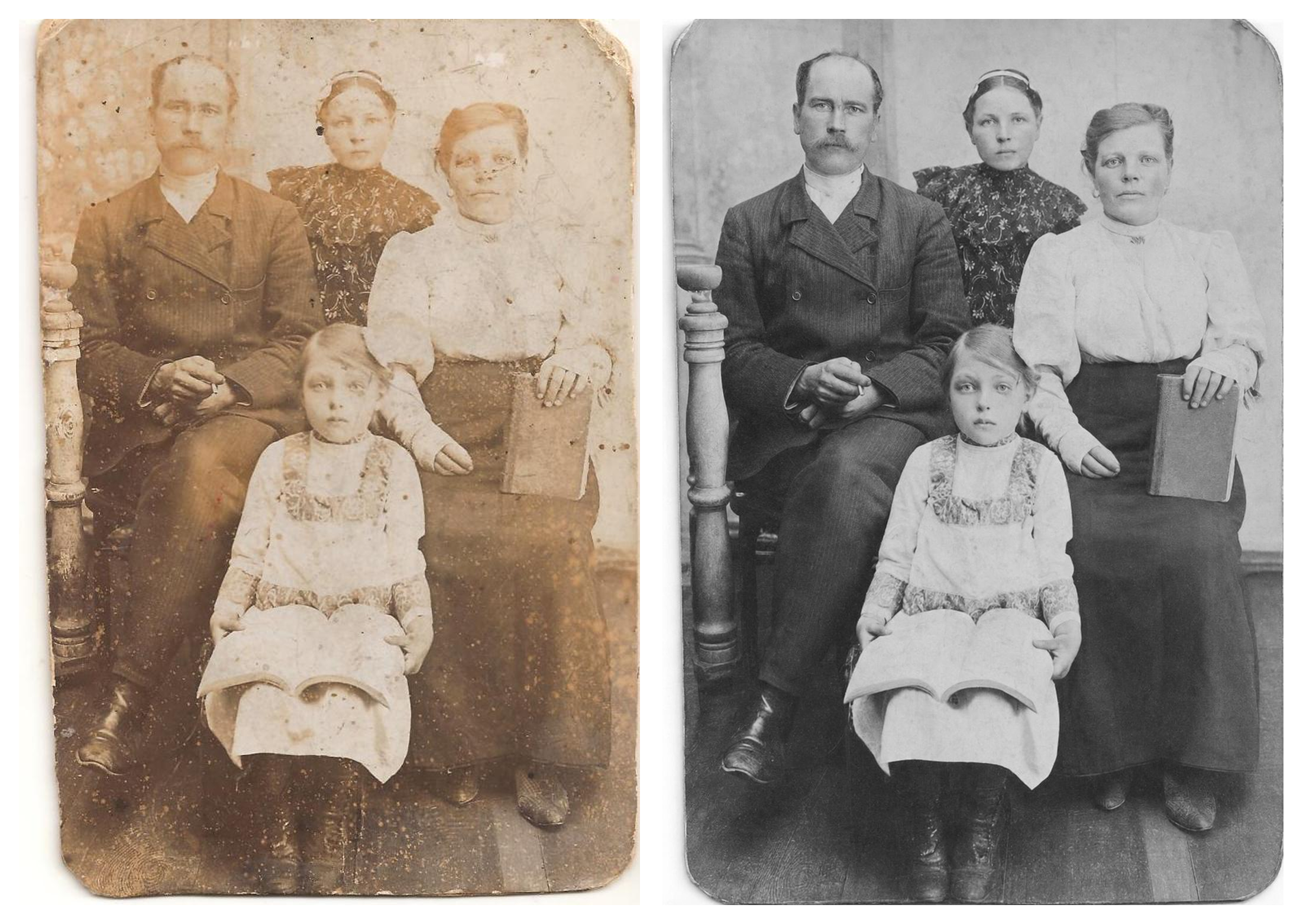
В результате мне понравилось именно то, что изображение не стало выглядеть как новая фотография. Оно просто стало выглядеть как тот же снимок, который лучше сохранился.
Почему колоризация — это уже не реставрация
После реставрации возникает очевидный вопрос: почему бы не раскрасить фотографию? Здесь есть фундаментальная проблема. Чёрно-белая фотография сохраняет информацию о яркости. Но этого недостаточно, чтобы однозначно определить исходный цвет объекта. Разные цвета могут иметь одинаковую яркость и поэтому выглядеть на чёрно-белом снимке практически одинаково.
Поэтому при колоризации нейросеть не «восстанавливает» настоящий цвет. Она строит наиболее вероятную его реконструкцию. Конечно, вероятность можно повысить. Модель может учитывать эпоху, одежду, материалы, архитектуру, растительность, географический контекст и множество других признаков. Но это всё равно будет реконструкция, а не восстановление фактически известной информации.
Именно поэтому я бы разделял эти две задачи для лучшего результата, так как в первой задаче мы говорим ИИ не фантазировать, А во втором случае наоборот.
- Реставрация — сохранение известной информации
- Колоризация — реконструкция неизвестной информации
Второй промпт — отдельная колоризация
Поэтому я сделал второй промпт, который ничего не должен восстанавливать. На вход ему подаётся уже отреставрированная чёрно-белая фотография, а задача — только добавить цвет, сохранив всё остальное.
TASK: Colorize this already-restored black-and-white archival photograph. This is a conservative color estimation task, not a creative reinterpretation. Treat the input image as structurally final. Add plausible color while changing nothing else.
IDENTITY AND STRUCTURE LOCK — HIGHEST PRIORITY: Preserve every person exactly as represented in the input. Do not alter facial structure, proportions, features, expression, gaze, age, skin texture, hairstyle, pose, or body proportions. Do not reshape, regenerate, smooth, beautify, sharpen, or enhance faces. Apply these rules independently to every person. Preserve all objects, clothing, architecture, background elements, textures, and spatial relationships exactly as they appear. Only add color information to the existing image.
COLOR ESTIMATION: Assume original colors are unknown unless supported by contextual evidence. Choose the most probable historically plausible colors rather than the most visually attractive ones. Base estimates on historical period, geographic context, materials, fabrics, vegetation, architecture, objects, and tonal relationships. Preserve luminance structure: highlights, midtones, shadows, and contrast. Use natural, restrained, low-to-moderate saturation. When uncertain, prefer muted neutral or period-plausible colors over saturated guesses. Maintain coherent colors across repeated materials and objects.
SKIN: Use natural restrained skin tones consistent with lighting and tonal structure. Preserve wrinkles, texture, shadows, asymmetries, and natural variation. Do not brighten, even out, idealize, beautify, or modernize skin.
LIGHT AND ATMOSPHERE: Preserve the original direction and character of light. Color must follow existing illumination. Do not introduce new highlights, shadows, glow, atmospheric effects, or relighting.
DO NOT: Do not perform additional restoration or reconstruct missing details. Do not change facial/object geometry, composition, framing, perspective, or crop. Do not add or remove anything. Do not apply cinematic grading, teal-orange, HDR, modern digital-camera color, or stylized palettes. Do not oversaturate any element. Do not add lens effects, depth of field, artificial sharpness, grain, or synthetic detail.
OUTPUT: Preserve the exact aspect ratio, framing, composition, geometry, detail, texture, and luminance structure. The result should look like a restrained, historically plausible color version of this exact photograph. Where the true color cannot be known, choose the least speculative plausible option. Authenticity and preservation take priority over beauty.
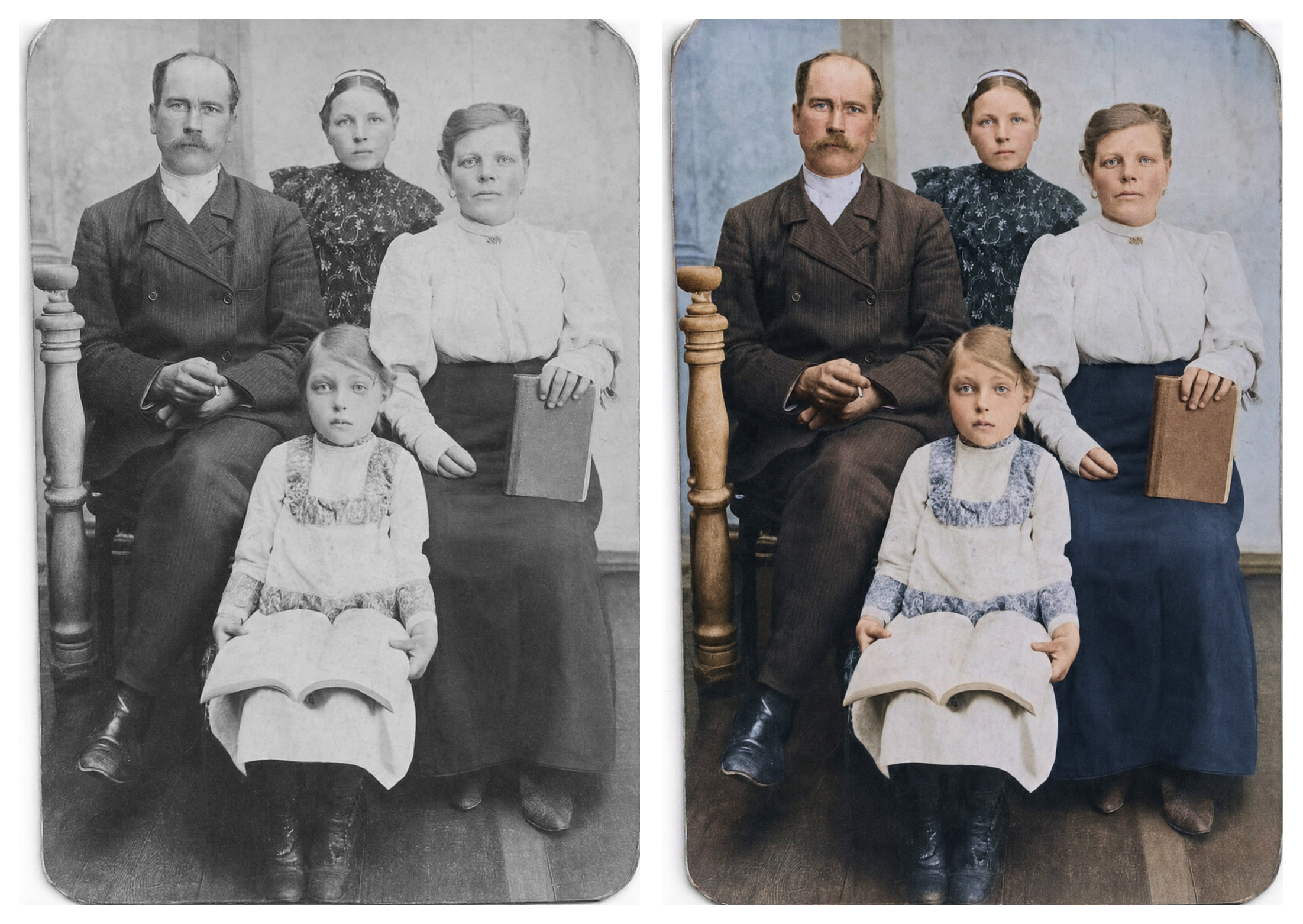
Но здесь появился неявный недостаток. Чтобы сначала отреставрировать фотографию, а потом раскрасить её, приходится дважды прогонять изображение через генеративную модель. А каждый новый проход может немного изменить исходник. То есть я получаю более контролируемую колоризацию, но рискую потерять часть аккуратной реставрации. Это не так заметно на общих фото, но критично на портретах.
Третий промпт — реставрация и колоризация
Тогда я попробовал объединить обе задачи в один промпт. Так появился третий, универсальный вариант. Он одновременно восстанавливает повреждения и добавляет цвет, но при этом старается сохранить исходную структуру фотографии, оптику, лица, одежду и другие детали.
TASK: Perform museum-grade restoration and historically accurate colorization of the attached black-and-white photograph. Treat the original photograph as the sole and authoritative source of truth. This is a restoration task, not a reinterpretation task: restore missing quality, not missing content. Every enhancement, reconstruction, and color decision must be strictly constrained by the visual evidence present in the original image and by historically plausible materials, lighting, and photographic characteristics. When evidence is ambiguous or absent, do less, not more.
COLORIZATION: Reconstruct realistic colors based on historical context, clothing materials, skin tones, hair, architecture, vegetation, lighting, and period-specific objects. Prioritize authenticity over aesthetics. Accuracy of color is the primary success criterion of this task. Avoid modern color grading, cinematic palettes, or artistic interpretation. If a color cannot be determined with confidence, choose the most probable neutral, desaturated, or historically typical color for the object/material in question rather than an eye-catching one. Maintain consistent color relationships, white balance, and lighting temperature across the entire image. The final result should look like a genuine, unedited color photograph taken at the same moment the original image was captured.
RESTORATION (conservative, evidence-based only): Remove scratches, dust, stains, folds, fading, compression artifacts, scanning defects, digital noise, and age-related damage. Recover lost detail only where it is directly and unambiguously supported by surrounding visual information in the original image. Repair damaged or missing regions minimally and conservatively. If a damaged area cannot be reconstructed with high confidence from surrounding evidence, keep the reconstruction neutral/plain rather than inventing texture, pattern, or detail. Do not add detail, texture, or structure that is not already implied by the original photograph — restoration should look "cleaned," not "enhanced."
IMAGE QUALITY: Improve clarity, reduce noise, and increase resolution while strictly preserving the original photograph’s optical characteristics: keep the same focus plane, the same areas of sharpness and softness, the same depth of field, and the same perspective as the source image. Do not simulate a different lens, aperture, or camera format, and do not alter background blur, bokeh, or focus falloff relative to the original. Physically accurate, filmic tonal response consistent with the period. Fine ISO 100–400 film grain, matching the apparent grain/resolution character of the source. Improve micro-contrast and detail only within what is plausibly recoverable from the original — do not fabricate sharper detail than the source evidence supports. Preserve the character of the original photograph rather than making it appear digitally generated or re-shot.
PRESERVE EXACTLY: Identity, facial structure, age, ethnicity, expression, gaze, hairstyle, and all recognizable facial features. Pose, body proportions, framing, composition, perspective, and camera position. Original focus, depth of field, and areas of blur exactly as in the source. Clothing design, accessories, architecture, furniture, vehicles, and all visible objects. Original atmosphere, mood, and historical period. Existing skin texture — do not smooth, beautify, or add artificial detail.
DO NOT: Modernize the scene. Change clothing, hairstyle, makeup, or appearance. Invent details, textures, or content that are not supported by the original photograph. Change the focus plane, depth of field, or bokeh relative to the original. Oversaturate colors or apply stylized/aesthetic color grading. Add HDR, excessive contrast, or dramatic lighting. Produce a CGI, 3D-rendered, AI-generated, or hyperreal appearance. Introduce glowing edges, synthetic gradients, sharpening halos, beauty filters, or plastic skin. Crop, recompose, or alter the spatial relationships within the image.
FINAL GOAL: The finished image should be indistinguishable from the original photograph, restored and naturally colorized — as if it were a perfectly preserved archival color photograph captured at the same moment as the original black-and-white photograph, with identical focus, framing, and optical characteristics. It must look historically authentic, minimally reconstructed, and free of any visible AI-generated characteristics.
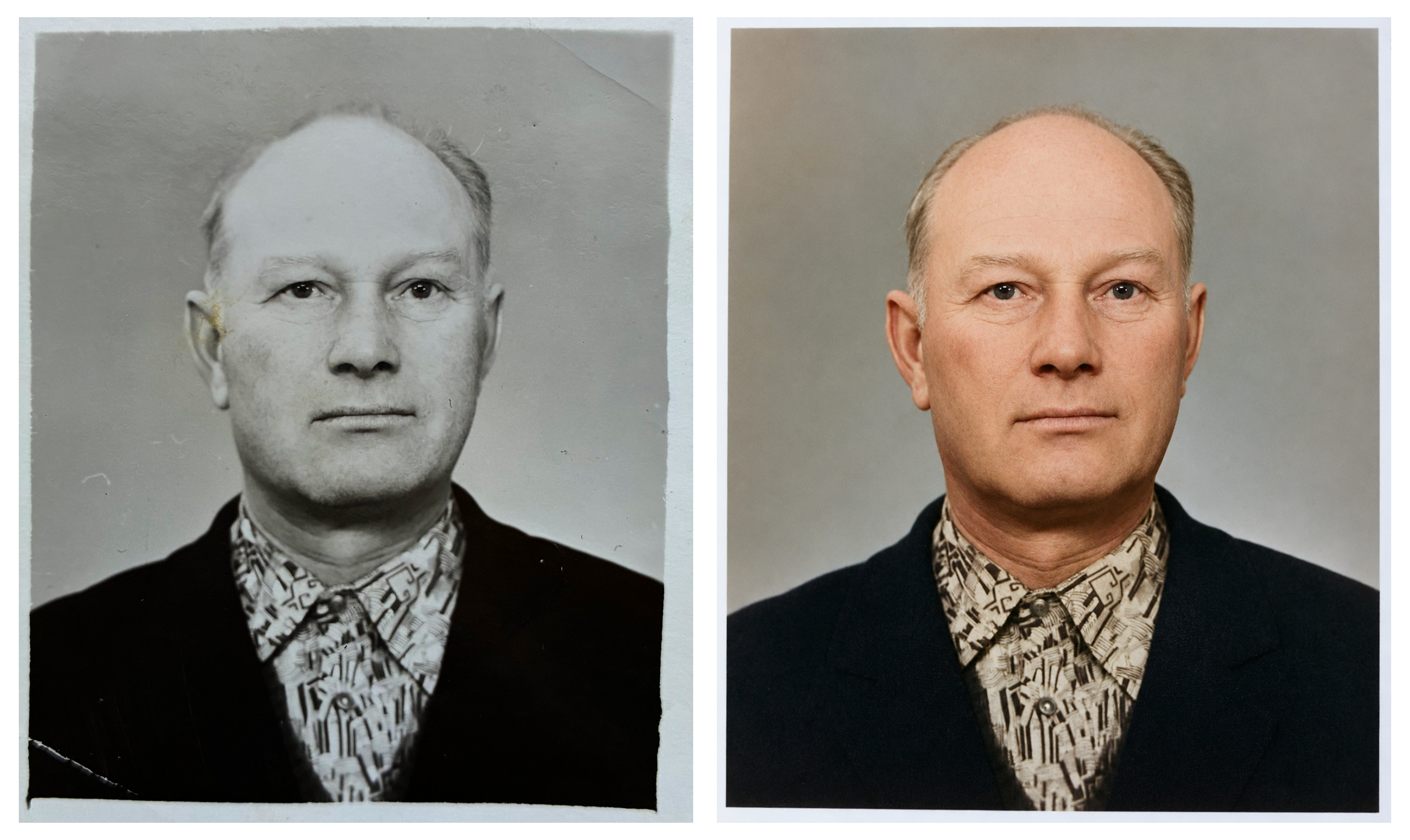
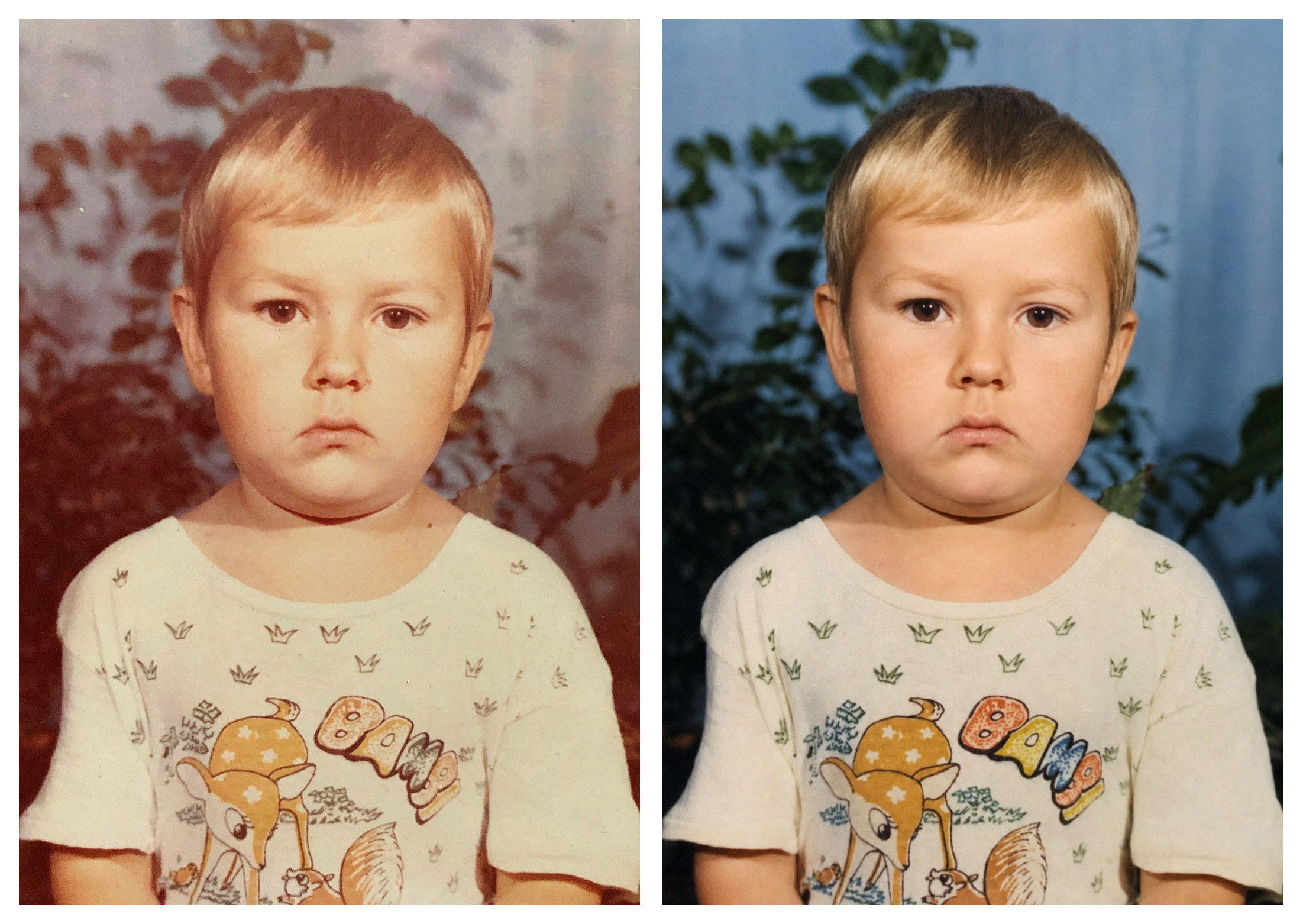
Этот вариант я бы использовал прежде всего для относительно хорошо сохранившихся фотографий — особенно портретов, где немного лиц и не слишком много повреждений. В таких случаях удобнее решить обе задачи за один проход.
Какой вариант выбрать?
В итоге я не нашёл одного идеального промпта. И, кажется, его здесь и не может быть. Я бы выбирал подход в зависимости от фотографии:
- Старая чёрно-белая фотография, где важна максимальная достоверность — первый промпт, только реставрация.
- Хорошо сохранившаяся чёрно-белая фотография, которую хочется увидеть в цвете — сначала реставрация, затем второй промпт для колоризации.
- Хорошо сохранившаяся фотография, где хочется получить всё за один проход — третий, универсальный промпт.